
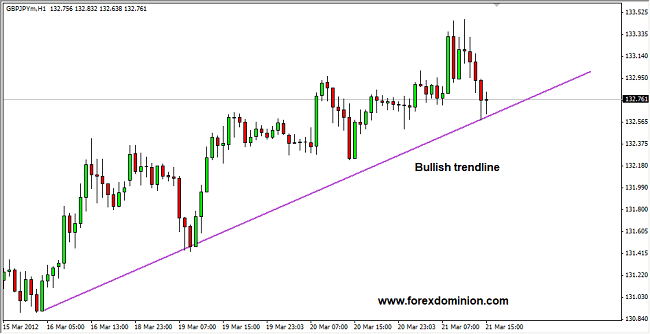
Stages that characterize a bullish or bearish market

The phases that characterize the bull and bear markets are as follows:

– Bull Market

This type of market is produced when the advance of prices reaches a level higher than the previous advance. Likewise, when no secondary trends become established below the latest peak. We can identify three phases in a bull market:
  • Accumulation phase: At this stage falls occur in the market as the investors sell because the economic news are mostly negative. There is a moderate activity that begins timidly to recover.
  • Recovery or expansion phase: In this case the activity begins with a modest progress and it produce a shy rising in market prices.
  • Distribution phase: There is great activity in the market. There are major upward movements in market prices and trading volume and investors take long positions without objection.

Read more

The Debate of the Future: The Interest Rates in the United States

Officials of the U.S. Federal Reserve (Fed) made ​​the decision to continue to cut the massive bond buying program.
But it seems that in the future the Fed will have to make a difficult decision: choose when to raise interest rates. The Fed President Janet Yellen pointed out that there are three “big” issues that officials should discuss;
  • The state of the labor market
  • Compliance with the inflation target of 2%
  • Factors that could threaten the economic recovery.

Some analysts are already starting to see a rise in interest rates in 2015 if economic conditions are thin.

Yellen and colleagues will discuss what kind of economic conditions define the stage for a rise in interest rates. It is necessary that the Fed clearly discuss on this topic in order to more accurately anticipate when it will happen.

Read more

Elliot Waves Theory – Description and Features

Elliot Waves Theory – Offering Great Predictions!

The Elliott Wave theory developed by Ralph Nelson Elliott (1871-1948), is based on the principle that price movements of financial markets can be described through the waves that form it and the study of the graphic formation of these waves. It is based on Dow theory and is a significant advance on this. In other words, it analyzes the different movements or «waves» in any period of time, both the bullish and the bearish waves.
After the death of Elliott, this theory was almost forgotten and years later was AJ Frost and Robert Prechter who with his book Principles of Elliott Waves (1978) made ​​it popular.