

The Forex market is the largest OTC market in the world, according to some estimates it moves almost 5 trillion dollars a day. Specifically, in the last triennial survey of the BIS, you can observe the level of negotiation and distribution among the main currency pairs that are traded in that market. This tells us clearly why it is the largest market in the world. But the fact is that not all the instruments that are traded in this market are the same. Each pair has its own characteristics and advantages and disadvantages.
Forex Education
Education on Forex trading and financial markets for beginners and professional traders interested in earn money trading
Overlay of the European session and the U.S. session

Usually the currency markets have the highest trading activity when occur the overlap of the trading sessions of the two most important financial centers in the world: London and New York. In fact, generally the average range of price movement between 8 am and 12 pm EST time, is on average about 70 percent of the average total range of price movement during the European session and 80 percent of the average total range during the U.S. session. Undoubtedly, for all currency pairs this period is usually the most active and volatile, and for this reason is ideal for traders who want to get high profits in the market with fast price movements, ie traders with high tolerance risk.
By themselves, the above percentages indicate that traders who are interested in trading with highly volatile prices and wide price ranges must act precisely during the hours in which the markets of United States and Europe overlap, especially if they are unable to monitor the market all day.
What is the Japan Tankan Survey Indicator?
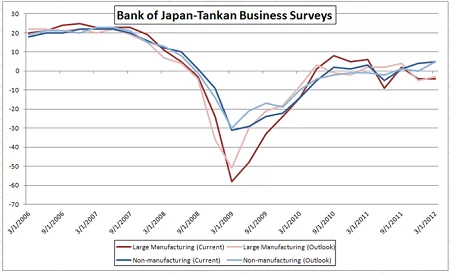
What is the Tankan survey?
It is an economic survey of Japanese business which is conducted by the Bank of Japan (BoJ), the country’s central bank, which uses the results to formulate monetary policy in Japan. The report is published four times a year in April, July, October and mid-December.
Indirect quotation and direct quotation – Forex


What is an indirect quote?
Is the price of a currency pair expressed as amount of foreign currency per unit of domestic currency.
In other words, when an indirect quote is given, the exchange rate is expressed relative to a fixed amount of the national currency (1 unit), while the amount of foreign currency is variable.
For example, if we are in the United States, the indirect quote for the Canadian dollar would be 1.17 CAD = 1 USD, so the exchange rate of the indirect quotation is expressed as USD/CAD 1.17 because it is the expression that reports the amount of CAD per unit of USD which is the national currency (for 1 USD we can obtain 1.17 CAD). If we were in Canada the indirect quotation of the US dollar would be 0.85 USD = 1 CAD (CAD/USD 0.85 indicates that for 1 CAD, which is the national currency, we get 0.85 USD). As we can see, in an indirect quote the base currency of the currency pair is the national currency.
How to start trading Forex if you are a beginner?


To trade Forex, you need to have a strategy to take advantage of the rapid changes and market conditions. There is no short way to develop a strategy because it is necessary to test it in different situations. This means that every trader must invest considerable time analyzing charts, reading news, and keeping updated with the economic announcements. If you are a novice trader, you can follow the following tips to start trading Forex.
Base Currency and Quote Currency
In this article we will define two basic concepts for trading in Forex: the base currency and the quote currency.
What is the base currency?
The base currency is the first currency listed in a currency pair traded in the Forex market. Sometimes you can also see this term as primary currency (although this term is not very suitable for its meaning in economics). In accounting base currency is the one used to represent all company accounts.
For example, if we have the pair EUR/USD, the euro (EUR) is the base currency and the US dollar (USD) is the quote currency or counter currency. The price given for the pair represents how much is needed of the quote currency to buy one unit of the base currency or, which is the same, how much of the quote currency can be obtained when one unit of base currency is sold.
The Exchange Rate
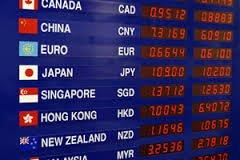
What is the exchange rate?
The exchange rate, also referred to as conversion rate or foreign exchange rate is the price at which a currency of a country can be converted (“changed”) in the currency of another country.
The system of exchange rates among currencies stems from the need of foreign currency by companies and nationals. In other words, the exchange rate comes from the movement of capital, goods, services and people across borders, that is, the existence of international trade. For example, when a company sells products to a foreign country, it is natural that this company wants to get paid in their national currency; therefore, the foreign company must buy the domestic currency of the manufacturer to pay the products purchased. There are also many situations in which anyone may need a foreign currency, for example, when traveling need currency of the destination country. The result is a foreign exchange market in which people, companies and other participants buy and sell foreign currencies.
November trading webinars of FXTM

FXTM upcoming webinars are loaded with trading insights from FXTM’s specialist team of FX trainers. Each webinar is designed to give you need-to-know information in just one sitting – from the comfort of your own home! Take a look at our list below. There may be several dates to put in your calendar!
See the review of the broker ForexTime.
US Initial Jobless Claims Indicator
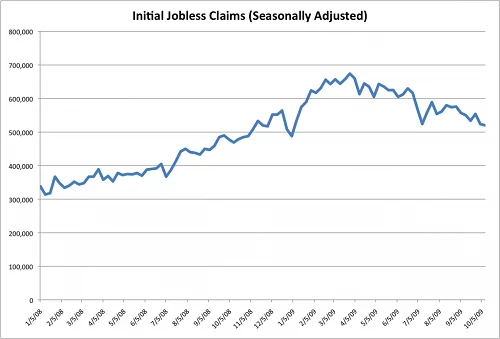
The Initial Jobless Claims indicator is a report that records how many people have applied for unemployment benefits in the United States, providing information on the state of the labor market of that country. This is a weekly published data, and provides information on how many people applied for unemployment benefits last week. Therefore, this report is also known as weekly jobless claims.
The report of the Initial Jobless Claims is prepared by the Employment and Training Administration of the U.S. Department of Labor, and is published on Thursday of each week at 13:30 GMT, with data from the previous week.
Forex Currency Pairs – Definition and Quotation


What are Forex currency pairs?
In the Forex market, currencies are traded in pairs. In these pairs each currency has meaning in relation to the other, so always stick together.
The two currencies in a pair are traded against each other. The rate or price at which these currencies are traded is known as the exchange rate. The exchange rate is regularly affected by supply and demand for currencies that make up the pair.