What trends are ahead for the crypto industry in 2019?

While 2017 was celebrated as one of the most impressive bull markets in cryptocurrencies’ history, 2018 saw the crypto rocket coming back to earth. Crypto enthusiasts are not discouraged however and there are some exciting upcoming developments and trends coming up in 2019.

Security Token Offerings (STOs)

2018 was the year where the door opened for security tokens (STO) and according to Nasdaq, is “set to take centre stage in 2019”. There will be more infrastructure set in place with the likes of security token exchanges, which will either come in the form of standalone exchanges or as new parts of existing platforms. A shift from ICO to STO is already happening with the need for more stable and safe investment opportunities that is paving the way for STOs.

Read more

EUR Markets Trend for 2019

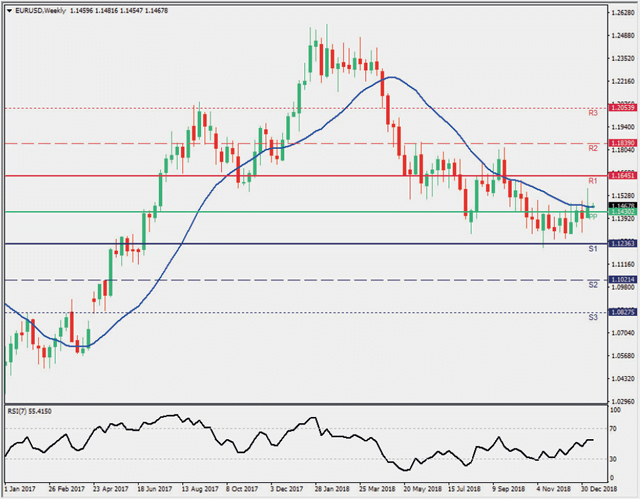
The Euro dropped from its top of 1.25 to 1.12 lows against the Dollar over 2018, and has been
trading at 1.14 in the early days of 2019. The drop in the Euro is directly associated with the
interest rate hikes by the Fed as the Euro Area interest rate has remained stable. Furthermore,
the exchange rate also reacted strongly on news regarding Brexit, with March 2019 fast
approaching and no deal reached yet.

On the macro side, the Euro Area has been quietly registering decent growth rates, estimated at around 2%, on a y/y basis. Inflation has been fluctuatingiii around the ECB target level of 2%. In 2019, growth is forecastediv to stand at 1.7%, down from the previous forecast of 1.8%, with a similar path for inflation. An increase in bond yields is expected, attributed to both the end of QE in December 2018 and the discounting of the effect of a possible ECB rate hike in late 2019. The hike, as communicatedv by the ECB in the last few meetings, is expected to take place in the third quarter of 2019.

Read more

USD Markets Trend for 2019

At the beginning of 2018 it looked like the combination of proposed infrastructure spending, tax cuts and expected interest rate rises could have supported the USD. Despite a poor first quarter, the USD rallied as the four interest rate hikes materialised and the benefits of the tax cuts, especially for corporations, meant record earnings growth during 2018. The USD Index gained more than 4.3% over the course of the year. The rally in both the USD and US Equity markets turned down in the final weeks of the year.

Expectations are that there will only be one or two rate hikes this year as signalled by the Federal Reserve, as the economic outlook for the US cools. Many are even suggesting no rate hikes at all for 2019 as corporate earnings slow and the trade war impact ripples out. Recession has been mentioned as a possibility for late 2019 as the much anticipated “yield curve inversion” (where short-term yields are higher than long-term yields) is expected to occur.

Read more

JPY Markets Trend for 2019

On account of the stronger Dollar fundamentals, the Yen lost ground against it over the course of 2018, although it registered significant gains in December, reducing the overall blow. Currently trading at 108.8, compared to 111.01 in the first week of 2018, the pair has an immediate Support level at 108.50, and a subsequent one at 104.87. The closest Resistance level stands at 111.43.

The Japanese economy appears to have left the perils of the past behind and is now growing at a moderate yet stable rhythm. Overall leading economic indicators are in the black, with both manufacturing and non-manufacturing outlooks being positive. The country keeps importing more, signifying that consumption is growing, while inflation, the utmost worry for the Japanese economy, appears to remain above zero, despite fluctuating on a m/m basis.
Furthermore, the unemployment rate continues to remain low, while retail trade keeps growing. BoJ policy is still accommodative, with no change in interest rates expected, at least until inflation manages to remain close to the target for a significant amount of time. No major political events are expected to take place in the country over 2019, thus Prime Minister Shinzo Abe will still maintain the majority in the House of Representatives, and Abenomics will continue boosting the Japanese economy.

Read more

What Should Your Forex Trading Plan Have?

A trading plan can be simple or complex depending on how you want it to be, but most important of all in the end, is that you have a plan and follow its rules.

These are some of the essential points that every forex trading plan should have:

1- Trading system

This is the true essence of the trading plan. It should be your own trading system that you have tested a lot and in which you have traded for at least two months in a demo account of an online broker or in a cent account in which you risk little money.

Read more

Binance Coin (BNB) surprises with its 22% profit

Binance Coin, the native token of the crypto exchange Binance, registered on Tuesday up to 22% of gains when entering to the index of the first 10 cryptocurrencies.

The Binance to Dollar (BNB/USD) exchange rate set its intraday high at 8,788 in the open of the European session. Previously, the pair opened at 7.158 as part of its rally previously underway. On January 31, the BNB/USD traded as low as 6,079, raising the pair’s weekly earnings to 44.5%.

From a technical perspective, the BNB/USD previously had a downward trend within a falling wedge formation. Ideally, as the contracts and the volume of the wedge begin to fall, the underlying asset attempts a break-up action.

Read more

Risks of trading Forex with the news

In a future article, we will see some techniques to trade the fundamental news in Forex. Before going on, you have to take into account the advantages mentioned in previous lessons about news trading but also the risks and disadvantages that I will expose next and that you will be able to experiment frequently when important market news is published. As with any trading technique, news trading can be profitable but risky, especially for novice traders

Increase of Bid-Ask spread

Some brokers can guarantee the execution of your orders during the publication of important news but not the spread, others can guarantee the spread but not the execution, and others may not guarantee either one thing or another and let the market decide what it can offer you. You will see very often how the spread increases considerably (2, 3, 10, or even more pips) moments before and after the publication of economic news or important economic indicator. If you are going to pursue small profits, 10 or 20 pips, this increase in the spread will also increase the chances of your trades ending up with losses.

Read more

Technical correction in the market

A technical correction is a change in the direction of the price of an asset after a constant movement (bullish or bearish). According to the definition of Technical Correction, this phenomenon occurs only when there is no evidence to support the change of direction in prices. These corrections often appear when investors temporarily reduce their buying trades in a bullish trend movement or their selling trades in a bearish trend movement.

Read more

How to Invest in a Choppy Market?

Today, I will talk about the choppy market, that is, the laterality in the market, how to approach it and take advantage of it.

Choppy means hectic or variable. The term Choppy Market, therefore, refers to when the prices of shares in the Stock Exchange or currencies in the Forex market rise and fall, or fluctuate uniformly, without following an upward or downward trend, so they remain lateral.

For a market to be considered “choppy”, the fluctuation can occur both in the short term, and in the long term. There are times when markets do follow a clear upward or downward trend.

But there are many times when they do not. That is why we can say that the market can enter a choppy or lateral state at any time. Or, failing that, the choppy state is one of the natural conditions of the market.

Read more

RMB vs yuan: understanding the difference

The national currency implies the money issued by a state central bank or any other state monetary institution. The Chinese currency is becoming popular and a more powerful international currency day by day. The most debatable issue in the international economy is due to the policy of artificial undervaluation of Chinese money against the United States dollar, to the extent that China has been gaining an advantage in export prices until 2015. During that period, the Chinese currency received an appreciation of its growing position in the world by the International Monetary Fund.

Before 2010, since it was under strict government control, the Chinese renminbi was never considered an international currency. But now the Standard Chartered Bank forecasts that 28% of international trade from China will be made in RMB in 2020.

Read more