Bears Power indicator – How to use it?

What is the Bears Power indicator?

The trading participants in the market are the buyers, struggling to rise prices, and the sellers, struggling to lower prices. In this case, depending on which side scores off, at the end of the market session the price will end higher of lower than the price of the previous session. Intermediate results, related to the highest and lowest prices in any moment at the day, allows to establish about how the battle between buyers and sellers was developing.

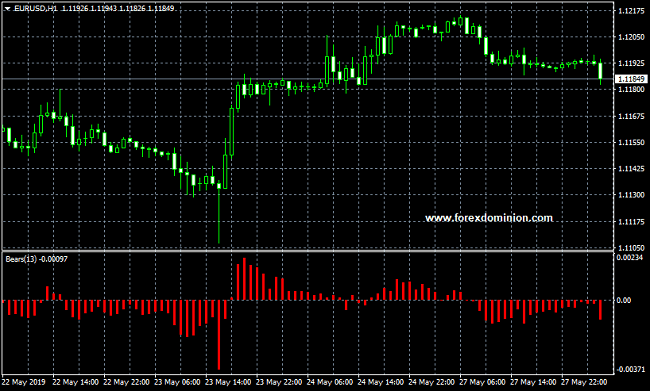
For this reason, is important to be able to estimate the Bears (sellers) balance, as a change in this balance could mean a possible change in market trend, which offer important opportunities to trade. This task can be solved using a technical analysis indicator known as Bears Power which is basically an oscillator. This tool allows to identify if the sellers in the market are weaker than buyers, and if so, then look for long positions to caught a trend change. The creator of this indicator was the Dr. Alexander Elder, a famous stock trader who is living in New York.  Basically, the Bears Power indicator is the difference between the close price and the exponential moving average. It is used as a reflection of the selling power in the market at any given time.

Read more

Expiration of Bitcoin CME futures generate volatility in the markets

  • In past periods, the maturity of Bitcoin CME futures resulted in price movements
  • CME recorded record volumes in the month of May, moving more than 33,000 contracts.

On Friday, May 24, some 2,710 contracts expired for the equivalent of 13,500 bitcoins settled by the CME. The maturity of these futures contracts increased the volatility of prices in the Bitcoin market. Taking as reference the past values, it can be observed that in the days following this type of events, the prices of the cryptocurrency with the highest capitalization in the world begin to move.

Read more

Bakkt Bitcoin futures platform will start testing in July

Bakkt bitcoin futures

    • The company will offer different types of future contracts in July.
    • A go-ahead from customers and regulators could speed up its launch.

The Intercontinental Exchange (ICE) subsidiary, Bakkt, is still in the process of developing its futures platform aimed at institutional capital. Through a post on Medium, the company announced on Monday May 13 the development of user acceptance tests (UAT, for its acronym in English) for bitcoin futures and crypto custody, which are expected to begin in July of this year.

The Atlanta-based company said it is continuing to work in partnership with the Commodity Futures Trading Commission (CFTC) of United States to build a platform that meets customer requirements in terms of clarity and stability, but that also conforms to all standards of US federal regulations. n this sense, the objective is for the Bakkt bitcoin futures to comply with all regulations and at the same time be a really attractive product for institutional investors.

Read more

Hedging in Forex – What is it and how is it applied?

hedging in Forex

What is hedging?

Hedging involves making an investment in order to reduce the risk of an adverse movement in an asset in which has been made the main investment. A typical example of hedging in Forex would be, for example, buying EUR/USD as main investment and cover with a buy position in USD/CHF because these two pairs have a high negative correlation and buying USD/CHF reduce the risk of a buy position in EUR/USD as our main investment.

The Hedging is a practice that every trader should know as a possible method of protection and risk management. Throughout this article we will see what the hedging is, how it works and what hedging techniques are most commonly used by traders.

Read more

The Gann Fan – Description and Uses

What is the Gann fan?

In this article, we will explain another market analysis tool developed in the last century by a famous analyst and trader, which was designed to study the price oscillations between market highs and lows. This tool has some popularity and can be found on most trading platforms, although its effectiveness has been questioned. The Gann Fan is a technical analysis tool used to indicate price movements from important highs and lows as well as to identify price breakouts.

William Delbert Gann developed analysis techniques based on geometric patterns and classical angles whose relationship, according to its creator, allows us to correctly predict future market movements in both time and price. This analysis tool is built based on Gann angles.

Gann was a stock market analyst who in the 20th century wrote his foundations to invest in the stock market in his work “The basis of My Forecasting Method”. This work, which consists of just over 30 pages as a manual, was published in 1935.

The Gann fan is formed by lines that start from the same point with different angles. It is similar to the Fibonacci fan, but the angles between the lines that make up this fan are classic angles like the 45 degrees one.

Read more

Financial Assets – What is an asset?

What are financial assets?

What is a financial asset?

An asset is a resource with economic value that owns or controls an individual or entity, which is interchangeable and from which it is expected to obtain future benefit. The issuance of an asset generates a debt to the issuing party (seller) and a right in the title (buyer).

For asset issuers, these represent a form of financing of their economic activity, since they receive money from the title buyer and generate the obligation of a future payment (generates a debt in the issuer). At the national accounting level, financial assets are not accounted for in the calculations of the Gross Domestic Product and, therefore, it is considered that they do not generate wealth in the country, although they contribute to economic growth by facilitating the movement of resources.

Read more

What is liquidity in the market?

What is market liquidity

What is liquidity?

In economics, business or investment, liquidity is the ability of an asset to be converted into cash quickly without losing its value.

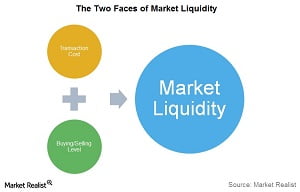
Thus, market liquidity can be defined as the ability to buy and sell an asset without causing a significant movement of the price. It can also be defined as the facility to exchange an asset for products and services, cash being the most liquid asset since it can be used immediately for any economic transaction. However, there are cases in which money is not the most liquid asset, for example, in countries with high inflation or hyperinflation, the population tends to stop using the currency in favor of a foreign currency or the use of other system of exchange of goods and services such as barter, leaving a hole of liquidity for its national currency. In other cases, they turn to other assets, such as in Venezuela, where people turn to Bitcoin precisely because of hyperinflation.

Read more

What is the FOMC (Federal Open Market Committee)?

Description of the FOMC

What is the Federal Open Market Committee (FOMC)?

The Federal Open Market Committee (FOMC) is a committee within the Federal Reserve responsible for the most important issues of monetary policy in the United States.

The FOMC is responsible for the country’s open market operations (ie, the buy and sale of US Treasury Securities by the FED). It is the Federal Reserve Committee that makes decisions about the interest rates and monetary resources of the United States. The FOMC establishes monetary policy by specifying the short-term objectives for open market operations of the FED, which is itself the target level for the federal funds rate (Federal Funds Rate is the interbank interest rate, which commercial banks charge each other for loans).

The FOMC also directs the operations carried out by the Federal Reserve System in the foreign exchange market (Forex), although any intervention in the foreign exchange market is coordinated with the US Treasury, which has the responsibility of formulating the policies of the United States with respect to the exchange rate of the US dollar.

Read more