Economic Cycle – Concept and Definition

The economic cycle is a series of phases that the economy goes through and that happen in order until reaching the final phase in which the economic cycle begins again.

Each cycle goes through periods of recession and periods of expansion. This phenomenon has been common throughout economic history, being known by other names such as “business cycles” or “cyclical fluctuations“.

It is known as economic cycle because once finished it starts again from the beginning forming a continuous wheel. However, due to its unpredictability this cannot be taken as a formal rule.

In the upward phases the economy improves and jobs are created, while in the downward phases the economy decreases. It is in the periods of contraction when economic crises break out. When oscillations of great intensity occur, economies can experience economic bubbles.

Read more

The Schiff Pitchfork – Construction and Variants

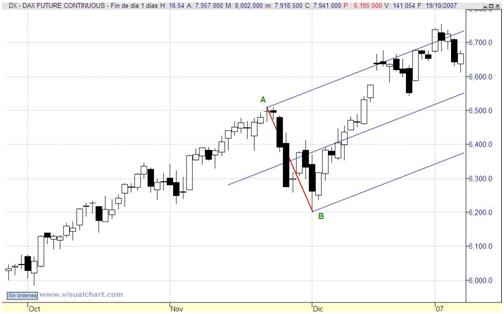
In a previous post we saw the use of the Andrews Pitchfork, a trading technique very used and known by many traders. But there is a less known variant of this method developed by a student of Andrews surnamed Shiff, who worked as a trader on the NYSE. The technique developed by this trader is intended to solve the problem that occurs when the Andrews Pitchfork presents a very marked inclination.

In this case, the Schiff Pitchfork shares with the Andrews Pitchfork the use of the line that is between points A and B, which is referred to as midline. The main difference however is that the construction of both Pitchforks is somewhat different. To construct the Schiff Pitchfork the following procedure is used:

Read more

The Best Forex Daytrading Strategies II

In a previous article we explained some basic day trading strategies for Forex and other markets, mainly based on price action.

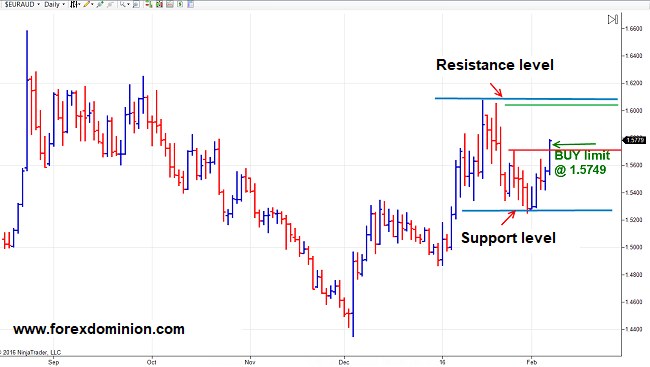
Continuing with the series on daytrading strategies based exclusively on Price Action (the most common price patterns), we are now going to present another series of strategies based on classic price patterns of technical analysis.

You can access the first article in the series at the following link: The Best Forex Daytrading Strategies I

Read more

Economic recession – Definition and Concept

A recession is a decrease in economic activity over a period of time. Officially, a recession is considered to exist when the GDP variation rate is negative for two consecutive quarters. It is also known as a period of economic contraction.

The economic recession is the phase of the economic cycle in which economic activity decreases, consumption and investment decrease, and unemployment increases.

In the following chart, we can see an example of a recession, with two-quarters of negative growth. If the negative growth continued, it would be a long economic recession. However, if the negative growth were to occur for only one quarter, we could not officially consider that decrease as an economic recession.

Read more

Financial Options – Types and Example

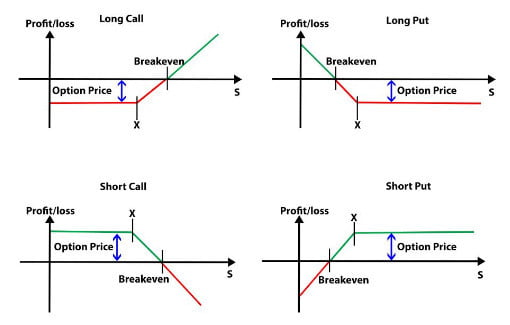
A financial option is a financial derivative that involves a contract to buy or sell an underlying asset, such as a stock, currency pair, commodity or other, which grants the buyer the right to buy or sell the agreed underlying asset at a future date previously agreed, depending on whether it is a call option or a put option.

The main characteristics of an option are indicated by its own name. The term ‘option’ refers precisely to the fact that the buyer of this financial derivative has the right (has the option) to execute the provisions of the contract. At the same time, the seller of an option is required to buy or sell (depending on the type of option) if the buyer exercises his right once the contract expires.

Read more

Reserve Currency – Definition and Concept

A reserve currency is the one used as a means of payment in international transactions due to its confidence. In other words, investors expect their value to be maintained over time. Currently, the dollar is the currency that mainly meets these characteristics.

An important part of the international reserves of each country is denominated in some reserve currency. The bodies responsible for pursuing this objective are the central banks.

Reserve currencies also serve to set the prices of commodities such as oil, gold, and other raw materials. The same happens with financial costs and international transport.

Read more

Efficient Market – What is it, Definition and Concept

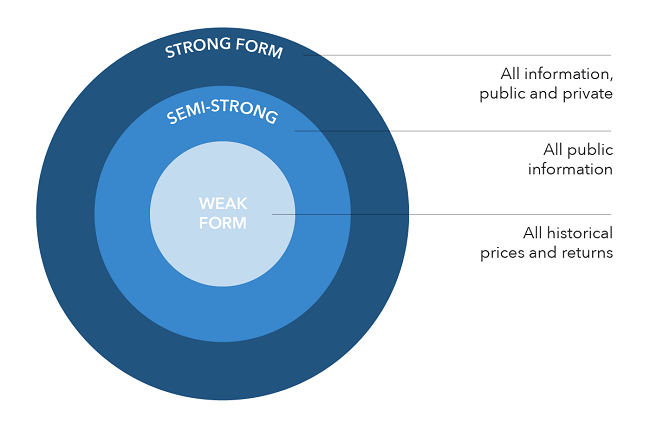
An efficient market is one in which the prices of the assets traded in it reflect at all times the information available on the market.

Financial asset prices react strongly to market information. When the information is released, the different market agents analyze it and use it to make decisions. So this information is incorporated into the price as it arrives.

Therefore, the more information on the market, the greater the efficiency of prices and the greater reflection of the fundamental value of assets. In this way, an efficient market can be considered as a market in which assets are quoted at their fair price and this price also truly reflects their real value at all times.

Read more

Trading Strategy with the Non-Farm Payroll (NFP) Indicator

The Non-farm payrolls (NFP) indicator is the report on total salaried workers in the United States except agricultural jobs, government workers, nonprofit workers, and private domestic workers. Today it is a key economic indicator for the United States.

The publication of the NFP report causes very wide movements in the Forex market, which are among the largest movements produced by the publication of economic news. This is why many analysts, investors, speculators, and investment funds try to anticipate the result of the NFP and the movement it will cause. Due to this great expectation before the publication of this economic indicator, the market can react with wide movements even when there is no deviation between the forecast and the final result of the NFP.

In this article, we are going to discuss some trading aspects related to this economic indicator, especially to avoid the exposure to excessive risks due to the high volatility that the release of the NFP can cause.

Read more

Internacional Trade & Trade Balance of USA

US Trade Balance

General definition and importance

The “International Trade & Trade Balance” is an economic report that measures the difference between imports and exports of goods and services in countries like United States. Imports and exports are important components of accumulated economic activities. Furthermore, representing 14 and 12 percent of the gross domestic product in the United States, respectively. Normally, increases in exports are positive for corporate profits and also good for the stock market. Changes in the trade balance with particular countries may have implications in the monetary policy with respect to those countries for which this report is important for investors who are interested in diversifying their investments globally.