The Awesome Oscillator of Bill Williams

The Awesome Oscillator (AO) is a technical indicator developed by Bill Williams which determines market momentum (the second of the five dimensions of the market according to Williams) at a specific time based on the last five bars, which momentum is compared with the momentum of the last 34 bars.

In this way the Awesome Oscillator is simply the difference between the simple moving average of 34 periods and the simple moving average of 5 periods which are calculated based on the midpoints of the bars (High + Low) / 2. The Awesome is displayed on the graph as a histogram:

Read more

Chart Patterns Formations in Trading

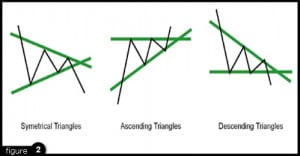
Financial markets, including Forex, involves plenty of chart formations, while not all of them are effective. There are many pricing patterns available and some of them give an excellent profit while a few of them doesn’t work good. First and the foremost, the chart patterns must focus on double top pattern and it is the common criteria used to grab the best accuracy. With a possibility to grasp 78% result, trading becomes simple and effective.

Read more

Binary Options on weather

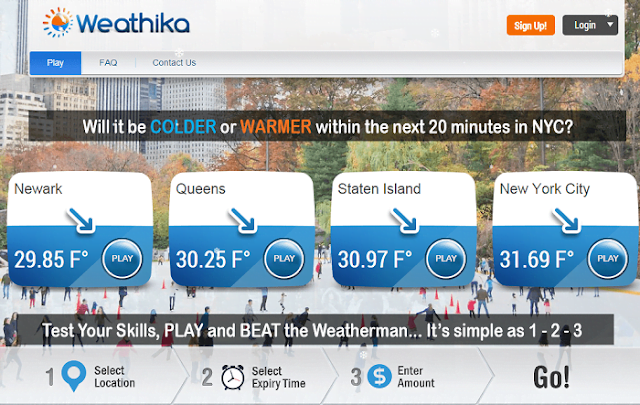
Currently financial markets allow to speculate virtually on anything, including the weather. The weather derivatives have become a lucrative and exciting relatively new market. Although most people make comments regularly on the state of climate and how it can affect their lives, almost no one stops to think about the possibility to speculate with the weather. This has changed with the introduction of derivatives as binary options on weather by the CME (Chicago Mercantile Exchange).
With the introduction of the range of Futures and Options on the CarvilHurricane index (CHITM), traders are now able to speculate about the state of the climate in order to obtain a financial return. Like traditional binary options, binary options on weather allow the trader to get a fixed payment if the option closes In The Money. And like traditional binary options, these derivatives offer both call options and put options.

The Consumer Price Index (CPI)

General Definition

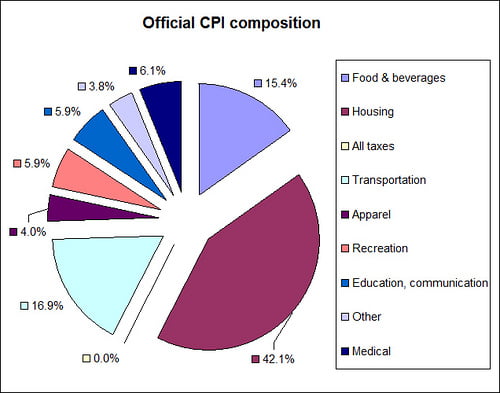
The Consumer Price Index or CPI is a measure that estimates the average price of consumer goods and services. The CPI measures the price change for a set of market goods and services from a fixed term until the next within the same area, be it a city, region or country. This is a monthly figure, which always refers to the previous month in which the Bureau of Labor Statistics issued the report.

The Bureau of Labor Statistics of the U.S. measures two kinds of CPI statistics:

  • CPI for urban wage earners and administrative staff (CPI-W).
  • CPI for All Urban Consumers (C-CPI-U).

Of the two types of CPI, it is considered that the latter is the most representative of the general population, accounting for 87% of the population of the country.

Read more

Forms to use Fibonacci in Forex

The Fibonacci indicator is a very powerful tool in Forex trading. It provides important levels that can be used individually in conjunction with other indicators and methodologies such as Candlestick Patterns, Price Charts, RSI, MACD, Momentum etc, and that levels can be used to establish entry points, Stop loss levels and Take Profit levels.

The Fibonacci indicator can be plotted over any time frame including 5 min, 1hr, 4hr, daily etc.

The traditional way to plot and analyze the price with Fibonacci involves looking back at the historical prices to identify the most important highs and lows. Depending on the temporality that is used to trade the market this would involve seeing more historical data to locate those levels that will be the reference to the Fibonacci retracements and extensions. The convergence of different Fibonacci levels can occur if the levels are placed on graphs of different Time Frame, when doing this can exist a convergence and the level become more relevant.

Read more

Durable Goods Orders Indicator – Definition and Relevance

Durable Goods Order definition

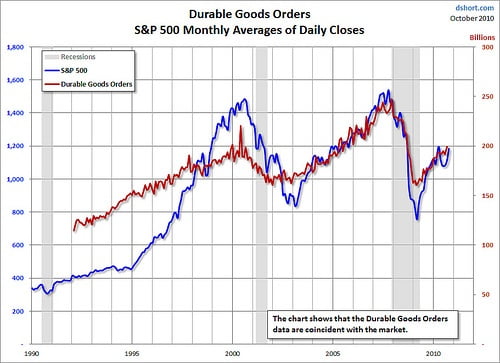
The Durable Goods Orders report is an economic indicator that reflects new orders placed with domestic manufacturers for delivery of durable goods (hard goods) from the factory, in the short term or in the future. This is a monthly published data, which always refers to the previous month in which the Department of Commerce’s Census Bureau issued the report.
The term durables goods applies to those who are expected to have a duration of more than three years. The report Durable Goods Orders comes in two monthly emissions:
  • The progress report on durable goods.
  • Manufacturers’ shipments, inventories and orders.

The reports are broken down by industry, which serves to eliminate the effects of a single volatile industry such as defense spending.

The Margin Call

What is the margin call?

margin call is the requirement by the broker or dealer for the trader to add new funds to meet the requirements of margin required to cover their open positions in the market.

The margin call is a situation that occurs in markets in which the traders invest with margin, ie, in those in which leverage is used (Forex is the best example of those markets). The margin call occurs when the free margin in the account falls below the minimum margin required by the broker to cover the positions the trader has opened. When the margin call occurs, the investor has to increase the margin in the account, which can be done by adding new funds or by closing existing positions. If the trader does not increase the margin in the account, the broker can close positions of the trader, whether the positions at a profit or a loss. Usually, it’s the system itself of the broker that make the margin call automatically when the free margin falls below margin requirements. Thus, the broker prevents clients lose more money than they have deposited in the account.

Read more

I left my trading account in zero: 4 steps to recover

So you have lost your trading account and now is in zero? Oh, man, I’m sorry, this have also happened to me several times …… !!  But let’s be a little constructive and rather than lament the big loss let’s think why the account was ruined and what we should do and as evil of many is the consolation of fools, think that ruin Forex accounts is something quite common.

Perhaps you are tired of hearing that 90% of traders lose money in their first year of trading. I really do not know if this statistic is very accurate, but unfortunately for what I see, I tend to think that is true. I myself have had accounts that have practically fallen to zero: lack of discipline, not following the trading plan designed, etc. are usually the most common causes that lead to continuous losses that diminish and undermine trading accounts even to activate margin call.

But do not miss any illusions, I believe that even the most famous and respected traders have failed at some point and have reached the bottom to return to the market and be successful.

Read more

Currency wars

currency wars

Definition of currency wars

It consists of manipulating the currency to sell more. You lower the value of your country’s currency and artificially lower your products to make them more attractive in other countries and increase your exports.

How can a country manipulate its currency? There are many ways, but simplifying, the two main ones would be:

  1. Lower interest rates. You pay less to have the coin. People prefer to invest in other currencies with higher interest rates.
  2. Sell a lot of your currency in exchange for other foreign currencies. In this way, you flood the market with yen, for example, and that depreciates the currency.

Read more

Position in Trading

position in trading

What is a position?

In the field of trading in financial markets, a position is a binding commitment to buy or sell a specific amount of financial instruments such as stocks, currencies, commodities or derivatives, to a certain price. The term “position” is also used in finance to describe the amount of assets held by a person, company or institution as well as the state of property of the investments of an individual or institution.

Do not confuse the meaning of “position” in the trading of financial instruments with the term “financial position”. The latter stands for “status” or “statement”, ie the balance sheet liabilities in a company to take charge of their debts and obligations.

Read more